
Brown County Criminal Docket Searches
Your best online stop is Kansas CaseSearch. Accept the user agreement, pick District, and select Brown County. A known case number gives the cleanest docket search. A party name or citation number works too. Filing-date and case-type filters help when a name returns too many hits. The list of case types is live, so trust its current labels rather than guessing abbreviations.
One layer is not the whole record. Brown County criminal docket access also includes the courthouse public terminal. The Clerk of the District Court can help by phone or counter. A Kansas Judicial Branch Form 1 request can target a specific public document. Matters flagged as payment-eligible may surface in the Central Payment Center. It is a payment service rather than a full register of actions.
- Choose District and Brown County in CaseSearch.
- Select case number, party name, or citation number.
- Add a filing-date range only when it helps narrow results.
- Open the match and read events from oldest to newest.
- Confirm an official copy or current setting with the clerk.
Brown County Criminal Docket Controls
The search form splits court level from search method. That split matters here. The 22nd Judicial District covers four counties, and an Appellate search runs on a separate path entirely. Setting the county control keeps a common-name docket search anchored to Brown. The portal may also throw up a human check before showing results.
| Field | Use | Status |
|---|---|---|
| Court | District for Brown trial cases | Required in flow |
| Search Type | Number, name, or citation | Required in flow |
| Search Term | Matching identifier | Required |
| County | Brown County | District flow |
| Extra filters | Type, DOB, filing dates | Optional |
Guest users get basic authorized details. Approved elevated users can see more, so ordinary readers should not expect every filing online. For deeper public information allowed by Kansas rules, try the courthouse terminal.
Criminal Dockets: What They Show
A Brown County criminal docket names the court file, then logs events in order. Expect entries for the prosecuting party, defendant, counsel, assigned judge, charges, settings, orders, and any public disposition. Remember that a charge is only an allegation. It proves nothing. Read an old charge description alongside amendments, dismissals, pleas, and the final judgment first. Then draw any conclusion.
| Case number | A unique district identifier. A format illustration is BR-2025-CR-000000; verify the prefix and exact number. |
|---|---|
| Charge | The alleged offense when public, subject to amendment or dismissal. |
| Settings | Arraignment, preliminary, status, plea, trial, sentencing, review, or show-cause dates. |
| Events | The register of filings, notices, motions, orders, and court action. |
| Disposition | The public outcome label and date, when available. |
Documents sit on a separate layer. The event index can confirm an order was entered even when no image of it appears on the web.
Brown County Criminal Docket Charges
A complaint, information, or citation opens a criminal path, yet it proves no conduct. Amended charging papers can change what the docket shows later. A motion entry is the same idea. It marks a request, not a grant. The next order supplies the court's actual response.
Key distinction: A calendar label shows why a matter was set. The later register entry or signed order shows what occurred.
Bond, capias, warrant, and forfeiture entries need context too. A single public line may not reveal the full order. When the exact result matters, ask the Brown clerk for the public order itself. The Brown County Attorney diversion policy is a useful local resource. But it is not a second criminal docket. It never states a result in an individual file.
Criminal Case Stages on the Docket
A Brown County criminal docket usually opens with a charge or citation. Arraignment may record a plea, counsel, or notice. It can also raise a bond issue. Pretrial entries often cover motions, discovery notices, status conferences, diversion status, and continuances. From there, a plea or trial event can move the file toward disposition. Sentencing and post-judgment entries follow behind.
Docket flow: Charge Filed › Arraignment › Pretrial Settings › Plea or Trial › Disposition › Sentencing
Check the newest entry before trusting any date. A reset can wipe out an earlier setting. Appeals, expungement petitions, or later reopening events add stages and may shift public access. Treat the Brown County criminal docket as a timeline, not a static summary.
Brown County Criminal Docket Outcomes
For hard numbers, the official fiscal year 2025 disposition table lists 125 felony dispositions and 141 misdemeanor dispositions for Brown County. On the felony side: 90 guilty pleas, 22 dismissals, and 13 in the report's “other” category. Misdemeanors broke down as 48 guilty pleas, 19 dismissals, 41 deferred or diversion outcomes, and 33 “other.”
These totals measure volume for one reporting year. They predict nothing and identify no case. A zero in the trial column does not mean Brown County never holds trials. For any single matter, use the individual register and judgment.
Brown County Criminal Docket Courts
The unified Clerk of the District Court keeps Brown County District Court files. Felonies, state misdemeanors, and state-law traffic cases all sit there. Kansas creates no separate Brown criminal clerk by offense level. The district court sits in the 22nd Judicial District alongside Doniphan, Marshall, and Nemaha counties.
City-ordinance cases run on a different docket entirely. Hiawatha and Horton municipal courts keep their own files. Ordinance and municipal traffic cases sit there. Everest, Fairview, and Morrill post no public online municipal docket portal. Their city clerks are the local fallback. A municipal judgment appealed under K.S.A. 22-3609 opens a district-court path, but the original municipal file stays a city record.
Brown County Criminal Docket Boundaries
Horton shows this split clearly. Paying a ticket and pulling a full criminal docket are two different things. The Horton citation and case-number search asks for one of those identifiers, and it warns that a fresh citation may need five days before it shows up.
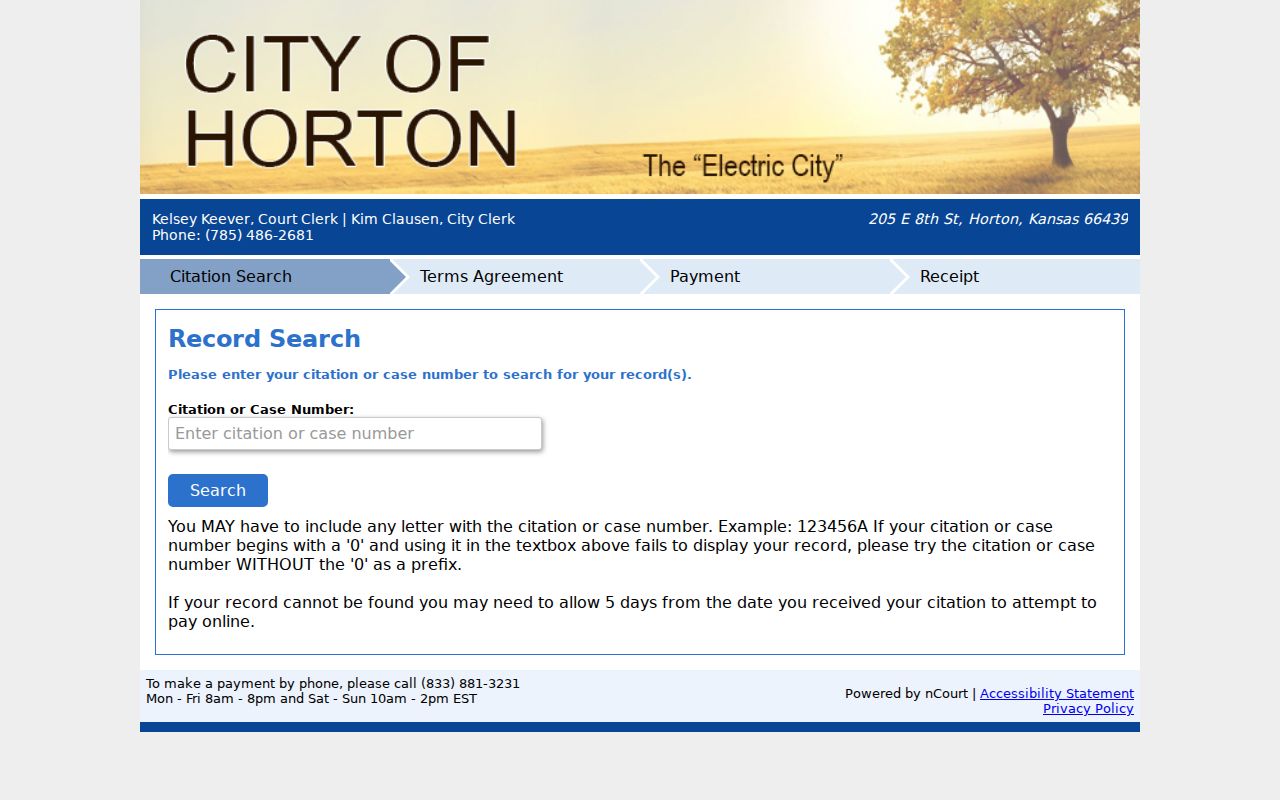
The screen tells you which Horton municipal matter can be paid online. It is not the municipal clerk's file. It is not the Brown District Court docket for a state case. A Fairview ordinance ticket works differently. The city posts no municipal docket portal, so the Fairview government page names the city clerk and how to reach that office.
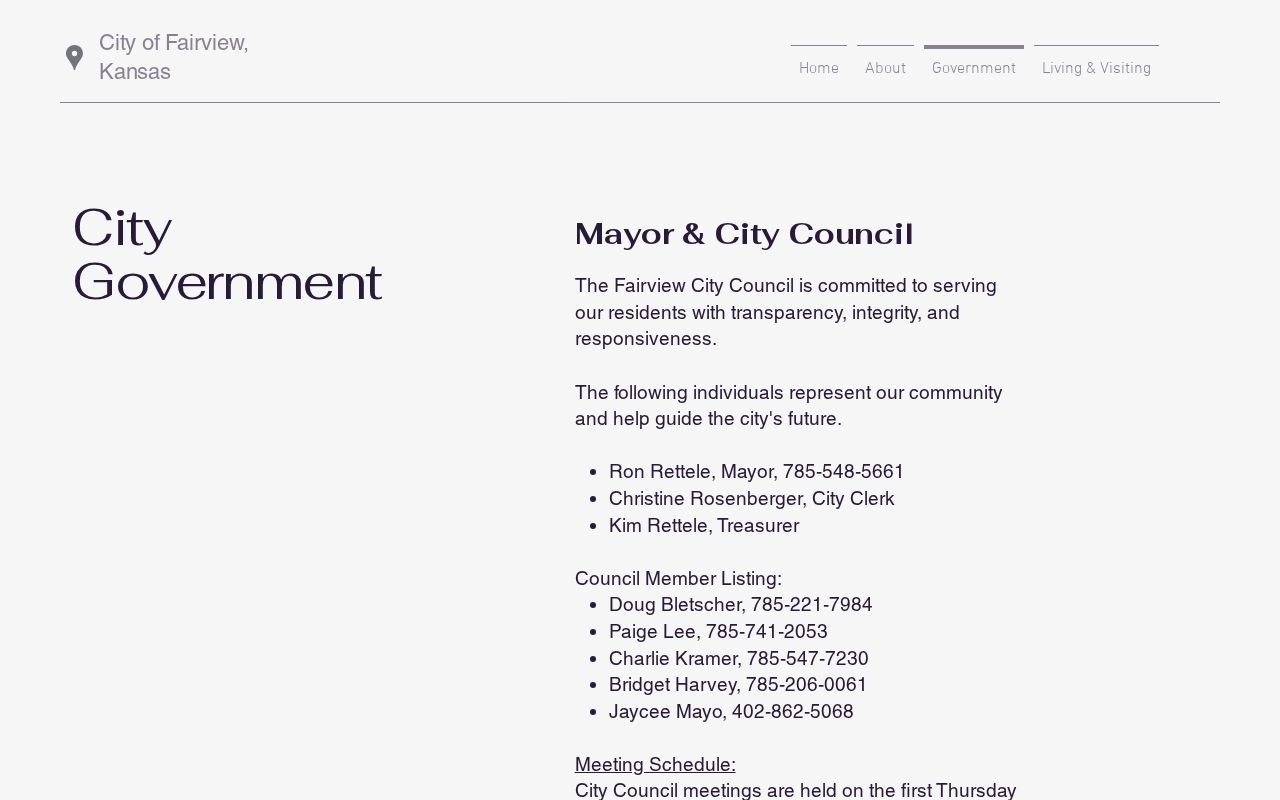
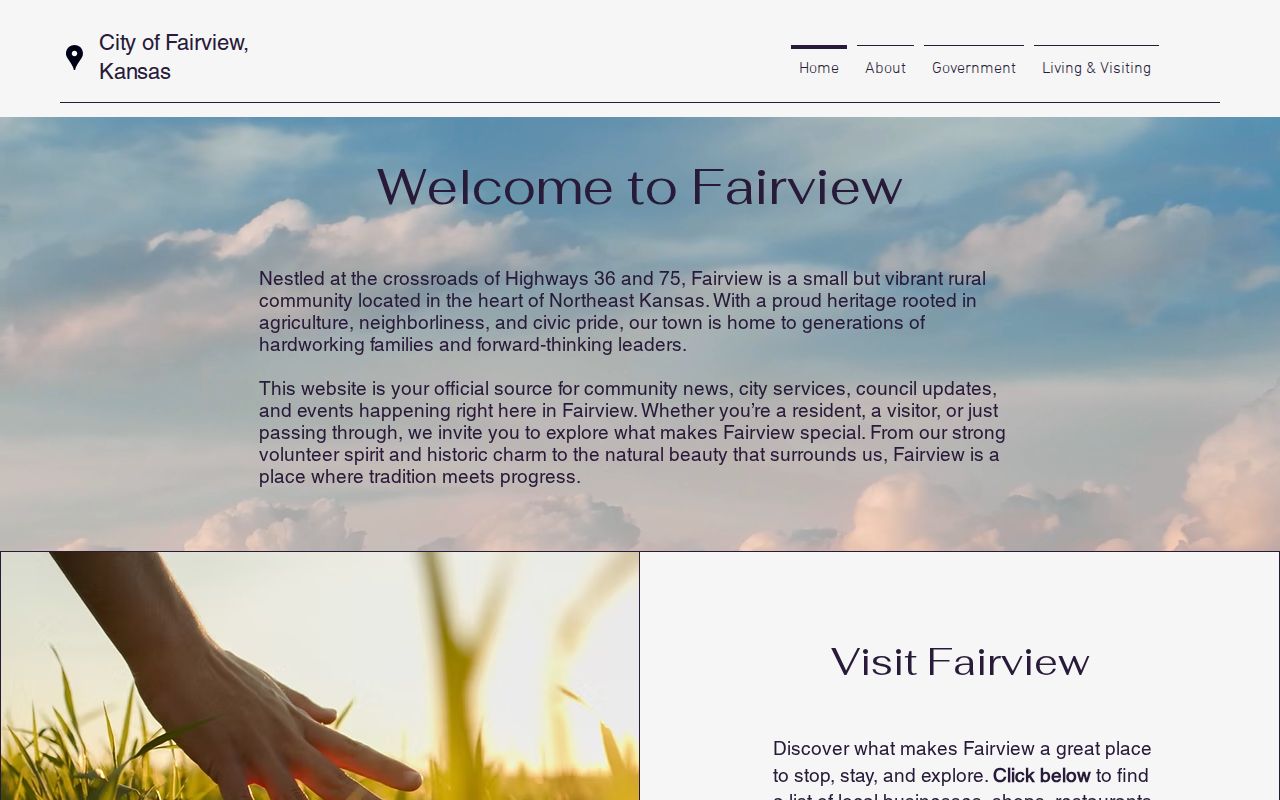
That routing keeps a Fairview ordinance matter from being read as a Brown District Court case. The official Fairview city page also lists the city-hall contact point.
Unclear which venue issued the case? Read the notice first. Then ask the clerk who actually holds the file.
Access Rules for Criminal Dockets
Kansas sets the rules for online case records. Rule 22 governs internet access, Rule 106B defines the electronic case record and allows courthouse terminal access, and Rule 123 shields personal identifiers. Some files stay out of view entirely. Adoption, juvenile, grand-jury, certain care proceedings, expunged cases, and anything sealed by law or order may be missing, masked, or limited.
Key rules:
Kansas Supreme Court Rule 22 controls electronic public access and exclusions.
Rule 106B addresses electronic case records and terminal access.
K.S.A. 22-2410 provides a petition route for eligible expungement.
A blank result does not prove the case is absent. Spelling errors can hide an entry. So can wrong venue, indexing gaps, age, or a lawful restriction. Never dodge a restriction by trying another database. Ask the clerk instead whether a public or redacted version exists.
Brown County Criminal Docket Documents
Run the search again with the case number and Brown County picked. All you may have is a citation number. Find out whether the district court or a city issued it. A payment hit proves only that the matter sits in that payment channel. It does not mean CaseSearch holds the full history.
For district cases, call the Brown Clerk of the District Court at 785-742-7481. You can also use the public terminal at 601 Oregon Street in Hiawatha. Ask whether the document is electronic, paper, archival, restricted, or copyable. A narrow Kansas Judicial Branch Form 1 request should name the case number. It should also name the document title and the date when known.
Local Rule 5 sets $0.50 for the first copy page. Each additional page costs $0.25, and certification costs $1. Ask the clerk for an estimate on any other charge. A browser print is not a certified criminal court record.
Note: Call before you visit. Confirm access, current hours, copy timing, and whether the requested Brown County criminal docket item is public.
Brown County Criminal Docket Verification
Confused by the newest public event? Give the Brown County Clerk of the District Court the case number, the event date, and the exact entry label. Ask whether a later public order controls and whether a plain or certified copy is available.